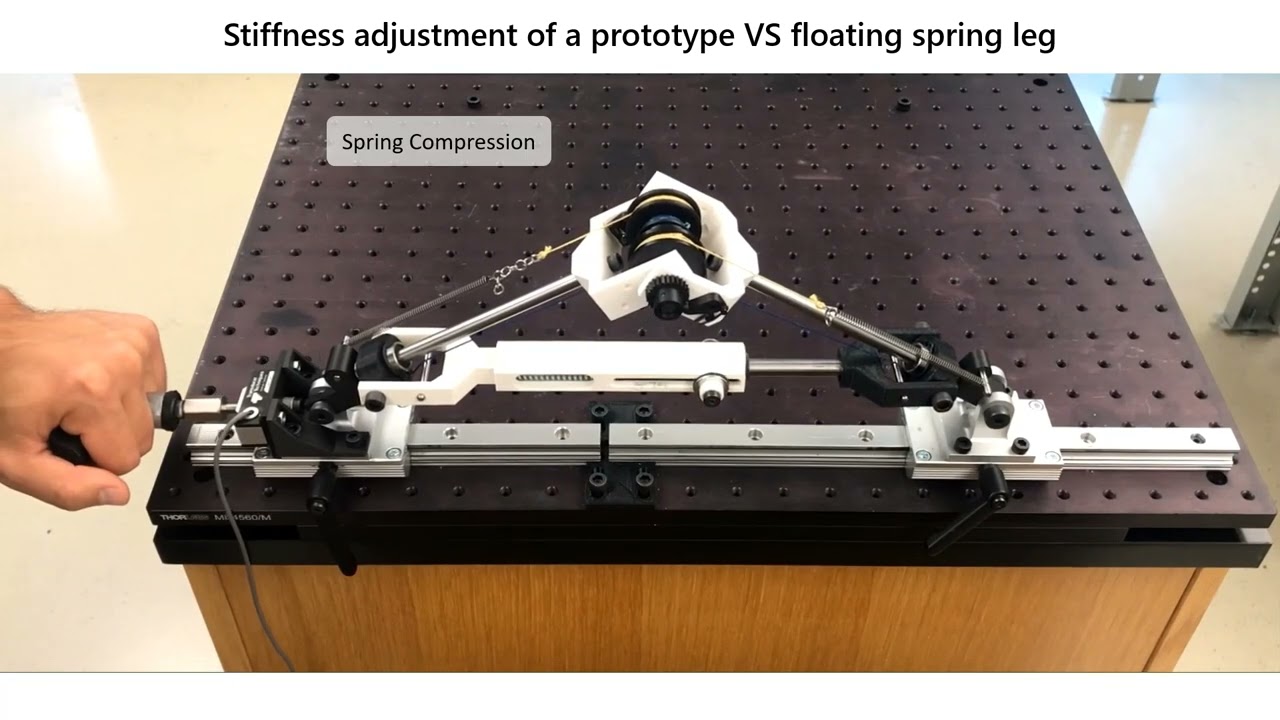
This paper introduces a floating spring mechanism that allows energy to be accumulated iteratively across multiple motion cycles, overcoming force and deformation limits of humans and motors. The design enables the weight of a human or robot to incrementally compress a spring, decoupling the required compression force from the total energy stored. This approach advances beyond conventional springs, which are limited by single-cycle force and motion constraints.
Why it matters: Assistive devices and robots often face strict limits on how much energy can be stored in a spring. By enabling iterative energy accumulation, this mechanism could allow spring-driven systems to perform demanding tasks without requiring large actuators, opening new possibilities for efficient human augmentation and robotic assistance.