The science behind robot boots
Why cycling is faster than running
The fastest human runs at 12.3 m/s. On a bicycle, the same human legs reach 21.4 m/s, almost twice as fast, although the bicycle adds no energy. Part of the answer is time. At top speed, each foot of a sprinter is on the ground for only about a tenth of a second, and only then can the leg push the body forward. On a bicycle, the legs push on the pedals all the time, while the wheels carry the weight of the body.
Supplying energy in the air
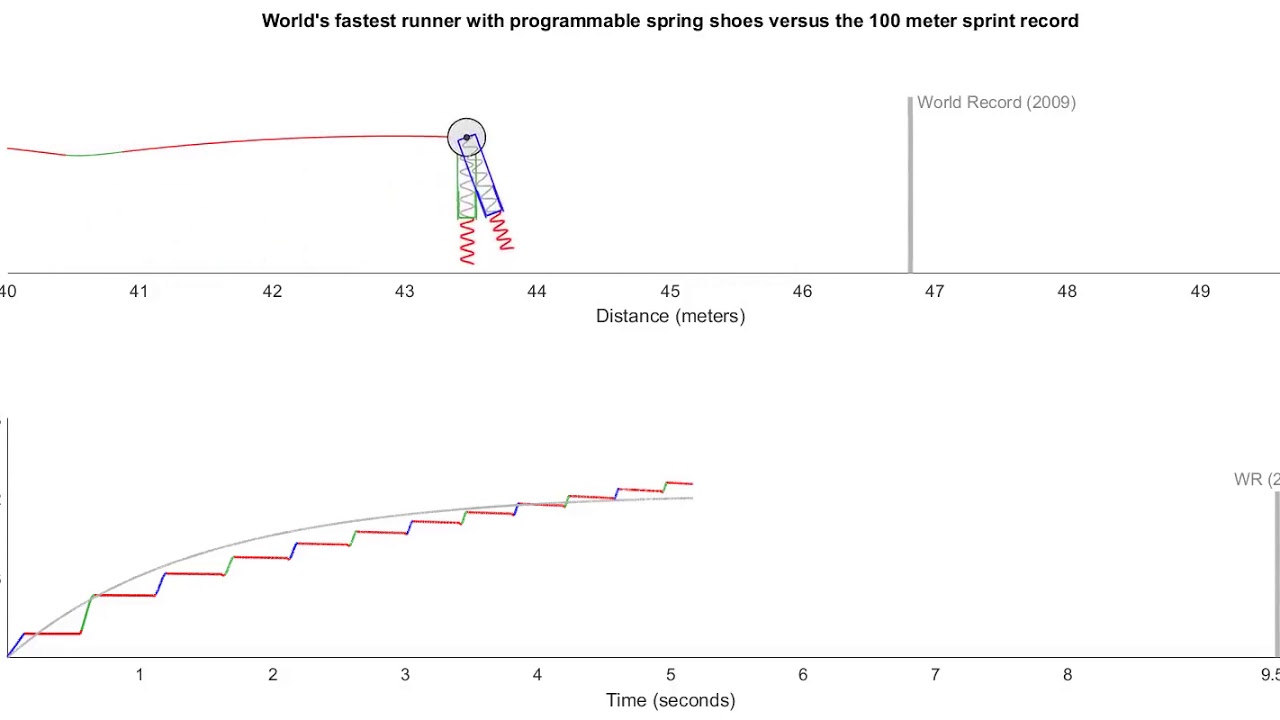
The paper How to Run 50% Faster Without External Energy brings this feature of cycling to running. Variable stiffness springs are attached to the legs. While the leg swings through the air, it compresses the spring and makes it stiffer. At touchdown, the stiff spring supports the body and releases the stored energy to drive the runner forward. The legs can then supply energy during the whole swing, about six times longer than the ground contact in natural running. All of the energy still comes from the runner: the device adds none.
What the research has shown
The study is theoretical: a model of running, based on the abilities of the fastest sprinter, predicts that
- running could approach cycling speed: a top speed of 20.9 m/s, only 2.4% below the world record in cycling;
- 50% faster remains possible under less ideal conditions: even if the legs supply energy for only 60% of each step, the top speed is 18 m/s, about 40 miles per hour, 50% above the fastest runner;
- the acceleration stays safe: the body reaches the top speed of natural running within ten steps, with accelerations within safely tolerable limits.
Challenges to overcome
A device of this kind does not exist yet. Building one requires a spring light enough to wear that still stores about 930 joules of energy, stability at high speed, protection against strain and falls, and time for users to learn a new way of running. Early bicycles faced similar problems of stability, safety, and usability before they became the efficient vehicles known today.
Where it could lead
- Sports: a new competitive discipline, much as cycling stands beside running today.
- Search and rescue: rapid movement on foot where vehicles cannot go.
- Sustainable transport: human-powered mobility that needs no fuel or charging.
In the media
A general-audience article on the idea, “Robo-boot concept promises 50% faster running”, appeared in The Conversation (2020) and was republished by Yahoo! News and many U.S. newspapers. The research was also covered by The Guardian, New Scientist and more than 40 other news outlets worldwide (all coverage).
The Skeptics’ Guide to the Universe discussed the work in Episode #776: